An industrial designer helps shape how a manufactured product looks, works, and can be made. A graphic designer helps people recognize, read, and act on information across print and digital media. Both roles make prototypes, revise designs, and work with production teams. The distinction becomes clearer when you ask what each designer delivers and what the team checks before approving it.
| Dimension | Industrial designer | Graphic designer |
|---|---|---|
| Design object | Physical product and its use | Visual information and identity |
| Daily work | Sketch forms, model in CAD, review physical prototypes | Organize text and images, develop layouts, adapt a visual system |
| Deliverables | Drawings, models, appearance specifications, revision notes | Layouts, brand assets, production artwork and digital exports |
| Collaborators | Product, engineering, manufacturing and suppliers | Brand, editorial, marketing, printers and production teams |
| Approval questions | Can someone use it as intended? Can the team make it within the constraints? | Can someone identify the right product and read the key details? Will the files reproduce correctly? |
Industrial designer profile · Graphic designer profile · BLS occupational descriptions
Product designer Josh Palit described receiving a prototype that had looked convincing in CAD. The physical sample exposed oversized snaps, a clearance problem where two parts met, and a larger overall form than expected. For a portfolio, that suggests a useful sequence: show the photo, identify which feature failed, and specify what you would check on the next build. Palit’s prototype account
One flashlight package, two design decisions
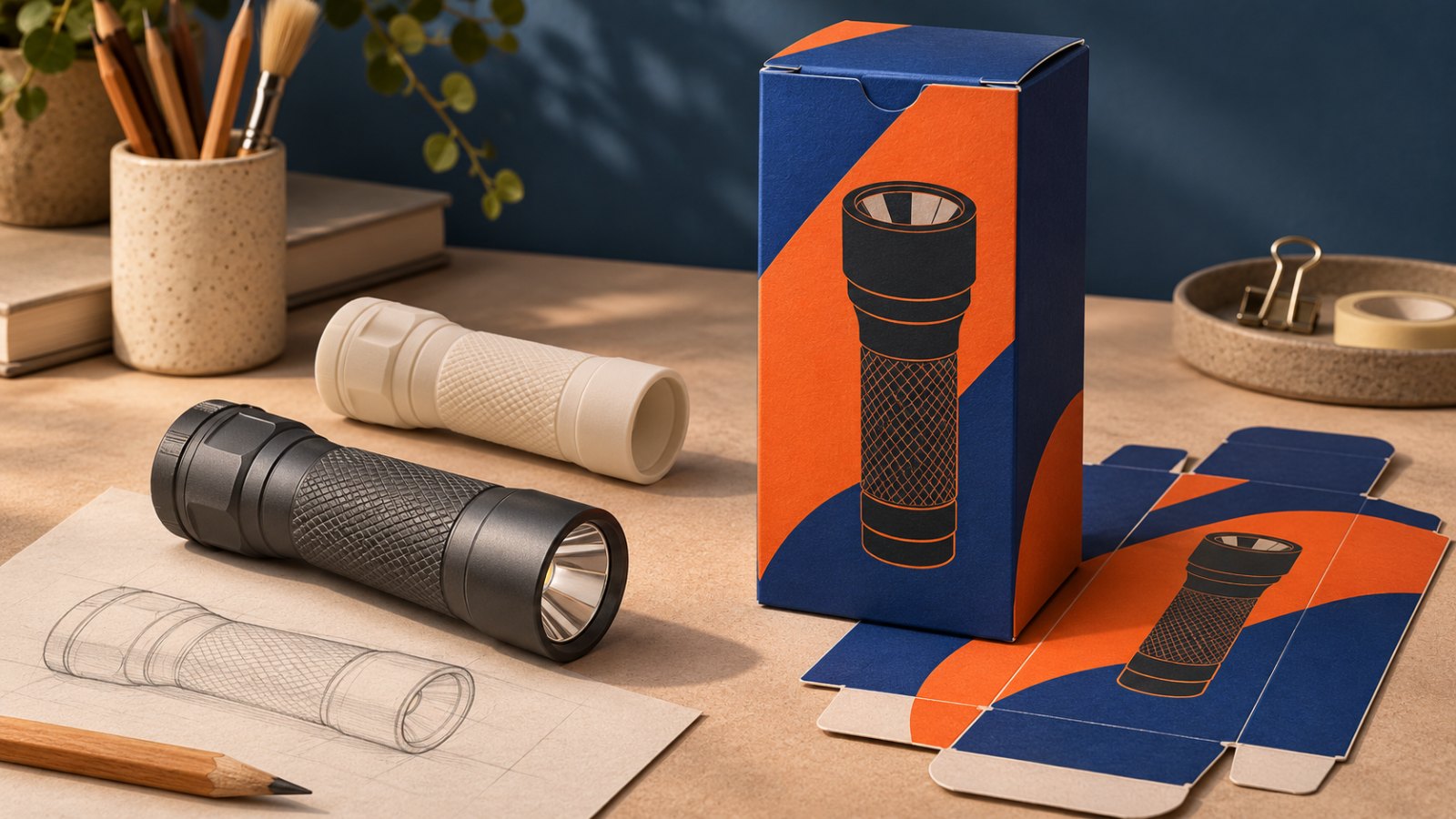
In a University of Cincinnati teaching project, a team of industrial and graphic design students reconsidered the Northern Lights flashlight package. The original plastic clamshell was hard to open. Interviews with outdoor enthusiasts also gave the team a reason to reconsider how the package conveyed the flashlight’s features. Their proposal used uncoated paperboard, a single die and no adhesive, and preserved a design provision for retail theft prevention. The team also used diagrams to explain features and color to distinguish product variants. These are documented proposal decisions. The paper does not report manufactured volumes or sales results. Timney and Chamberlain, section 6.2
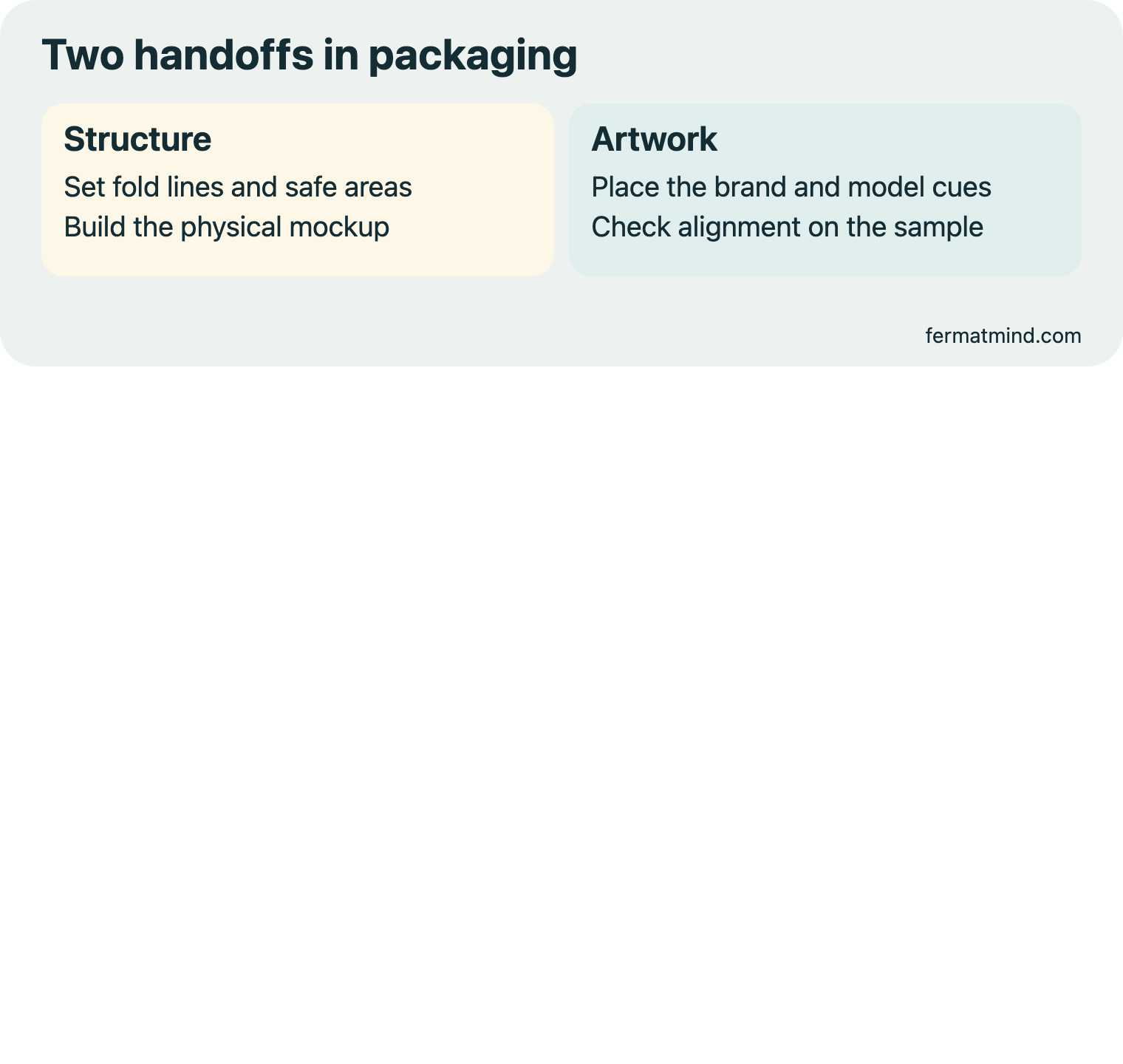
Two handoffs follow from that example. First, use the folded structure to check which panel has room for the model name and diagrams. Then put the graphics back onto a full-size mockup to see whether folds interrupt the reading order. A Chinese packaging studio described comparable checks in its own workflow: test the fit with an unprinted mockup, then review the artwork and color on the intended stock. That studio workflow is a separate practitioner example. Packaging studio workflow
Getting your first job
In the U.S., BLS describes a bachelor’s degree as typical for entering either occupation and highlights portfolios for both. For an industrial design application, choose a project that shows how you got from a sketch to a physical model and what you changed after handling it. For graphic design, include at least one project in which the typography, image hierarchy, and output had to work across more than one format. A hiring team can then see whether you can explain decisions and prepare usable files. BLS industrial design entry guidance · BLS graphic design entry guidance
When comparing first offers, align city, employment type, seniority, and base pay period. Ask whether a range covers the exact team and level you are interviewing for. A national occupational median describes the broader workforce and cannot supply a starting salary. For this edition, a comparable pair of first-job offers with verified public pay is unavailable.
U.S. pay and experienced hiring
| U.S. BLS measure | Commercial and industrial designers | Graphic designers |
|---|---|---|
| Median annual wage, May 2025 | $83,910 | $62,960 |
| Projected employment change, 2025–35 | +2% | −2% |
| Projected annual openings, 2025–35 average | About 2,800 | About 16,000 |
The wage figures are national occupational medians. Employment change and annual openings answer different questions. Graphic design can have projected job losses and still have replacement openings as people leave the workforce or change occupations. Use a posting’s location and scope when judging an individual offer. BLS industrial designer data · BLS graphic designer data
| Phoenix-area advertised examples | Experience and work | Advertised pay |
|---|---|---|
| CoreKinect, Industrial Design Engineer, Chandler | 2–4 years. Full-time role combining product form, prototypes, package structure and artwork. Posting | $80,000–$100,000 per year |
| Specialized, graphic designer, Phoenix | 3 years of professional graphic design required. Full-time production work preparing proofs and artwork for digital and offset printing. Expired posting | $24–$27 per hour |
These examples overlap in geography and experience. Employers, scope and pay periods differ. The CoreKinect role also covers graphics, so it illustrates how employers can combine the two disciplines. Keep the amounts in their posted units and ask what the employer guarantees. Shelby Stanford’s public call for freelance packaging designers shows another kind of visual assignment: applying approved artwork to dielines, preparing files for print and tracking product versions. The call did not list pay. Freelance call
Ask industrial design interviewers which prototype decisions you would own after engineering review. For graphic design, ask whether you would set the visual system, adapt it, or own the print handoff. For either job, ask how base pay, incentives, and contract duration are defined.
What belongs in each portfolio?
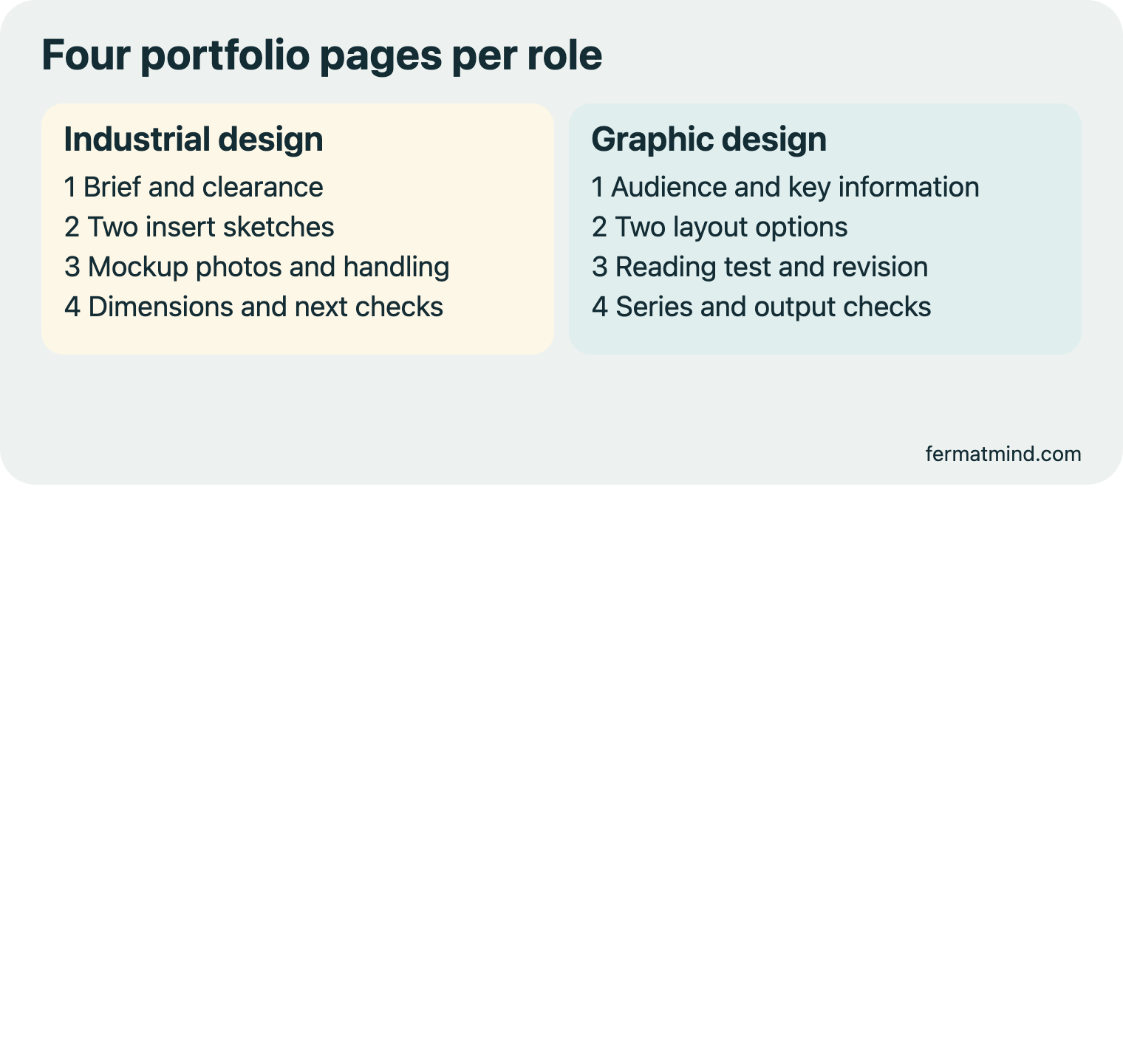
Use the same fictional flashlight brief and make two four-page case studies. Identify your contribution and write down what still needs testing.
| Page | Industrial design: package insert | Graphic design: package artwork |
|---|---|---|
| 1. Brief | Product dimensions, contact points and room for fingers | Audience, model names and verified feature copy |
| 2. Options | Two ways to retain the product, with a reason to prototype one | Two type hierarchies at the same size, with a reason to choose one |
| 3. Revision | Show where the first mockup catches, then retest removal after a change | Ask someone to find the model and runtime, then revise any confusing panel |
| 4. Handoff | Dimensioned drawing, prototype photos and unresolved manufacturing checks | Two variants on the dieline, proof notes, and source and export files |
BUFF Brand Design described using renders for quick internal review and photographs of finished packaging to show the actual material and print finish. If you have both, put the render beside the design decision it explains and the photo beside the check it documents. Label simulated results and renders clearly. BUFF interview on ZCOOL
Try both tasks in 30 minutes each
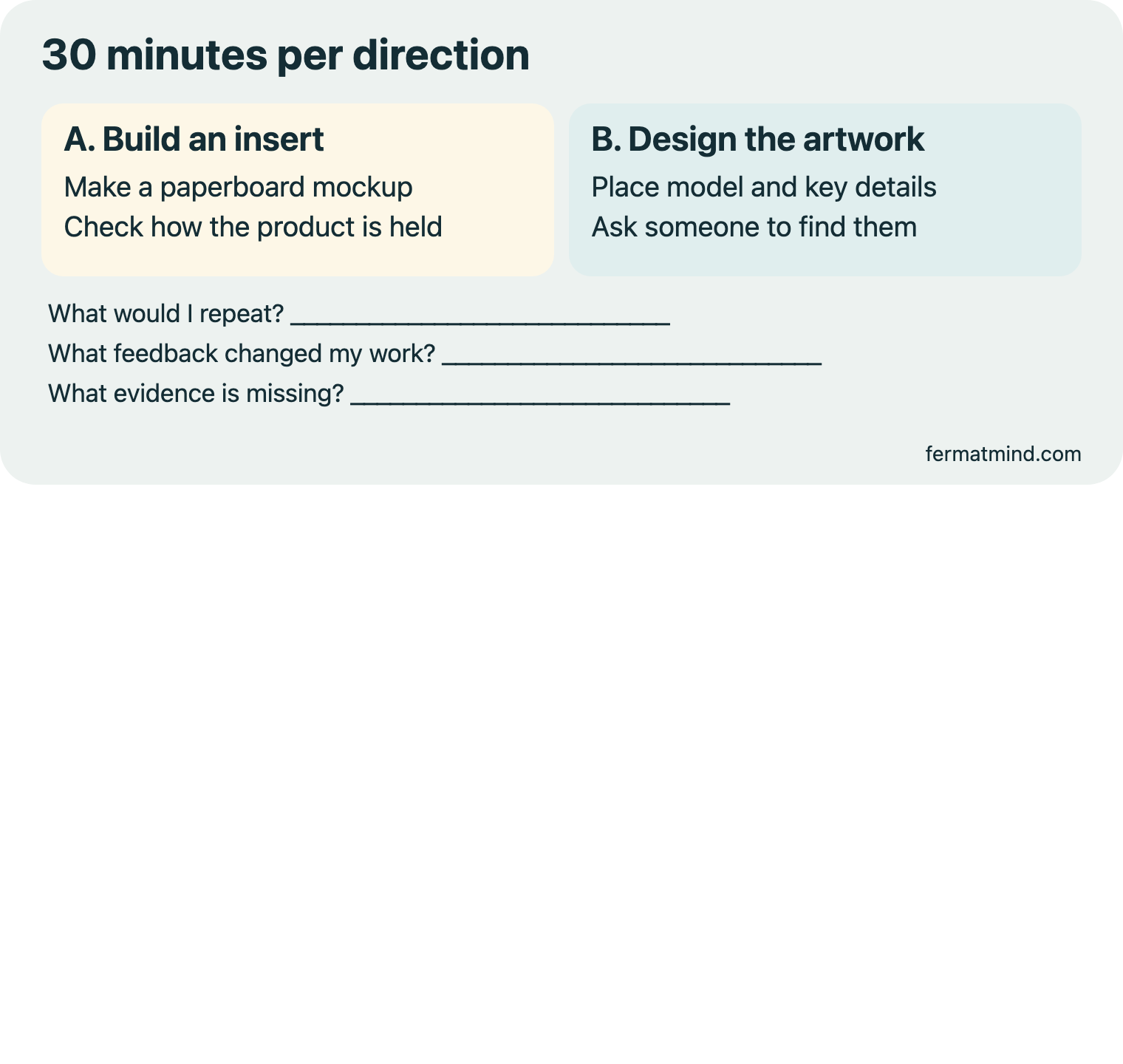
A. Build a paper insert. Use the same product dimensions for each attempt. Check whether the flashlight moves and whether fingers can reach it. Change one dimension and repeat the same handling check.
B. Lay out two panels. Use one brief for both variants. Ask someone to locate the model name and runtime. Change one part of the hierarchy and repeat the reading task.
| Record afterward | Insert | Artwork |
|---|---|---|
| Which step would I like to repeat? | ______ | ______ |
| What feedback changed my design? | ______ | ______ |
| What evidence would I add before applying? | ______ | ______ |
O*NET lists U.S. occupational interest codes ARI for commercial and industrial designers and AC for graphic designers. Both feature Artistic interests. Use the profiles to think of tasks to try, then compare what happened during your work. The codes describe occupations and do not establish individual fit. O*NET interest classifications
Compare the two careers on FermatMind
Frequently asked questions
Which role pays more in the U.S.? The May 2025 national occupational median is higher for commercial and industrial designers. Compare actual offers at a similar level and location when choosing between jobs.
Can I move from graphic design into industrial design? Visual research and presentation can transfer. Add evidence of a physical prototype, a use constraint, and a revision based on handling or testing.
Which designer owns packaging? Check who designs the structure, who owns the artwork, and who approves the proof. Employers may split or combine those duties.
Can I use a student project in a portfolio? Yes. Identify it as a student project and show your contribution, decisions, and checks. Label any proposed outcomes and unresolved tests.

