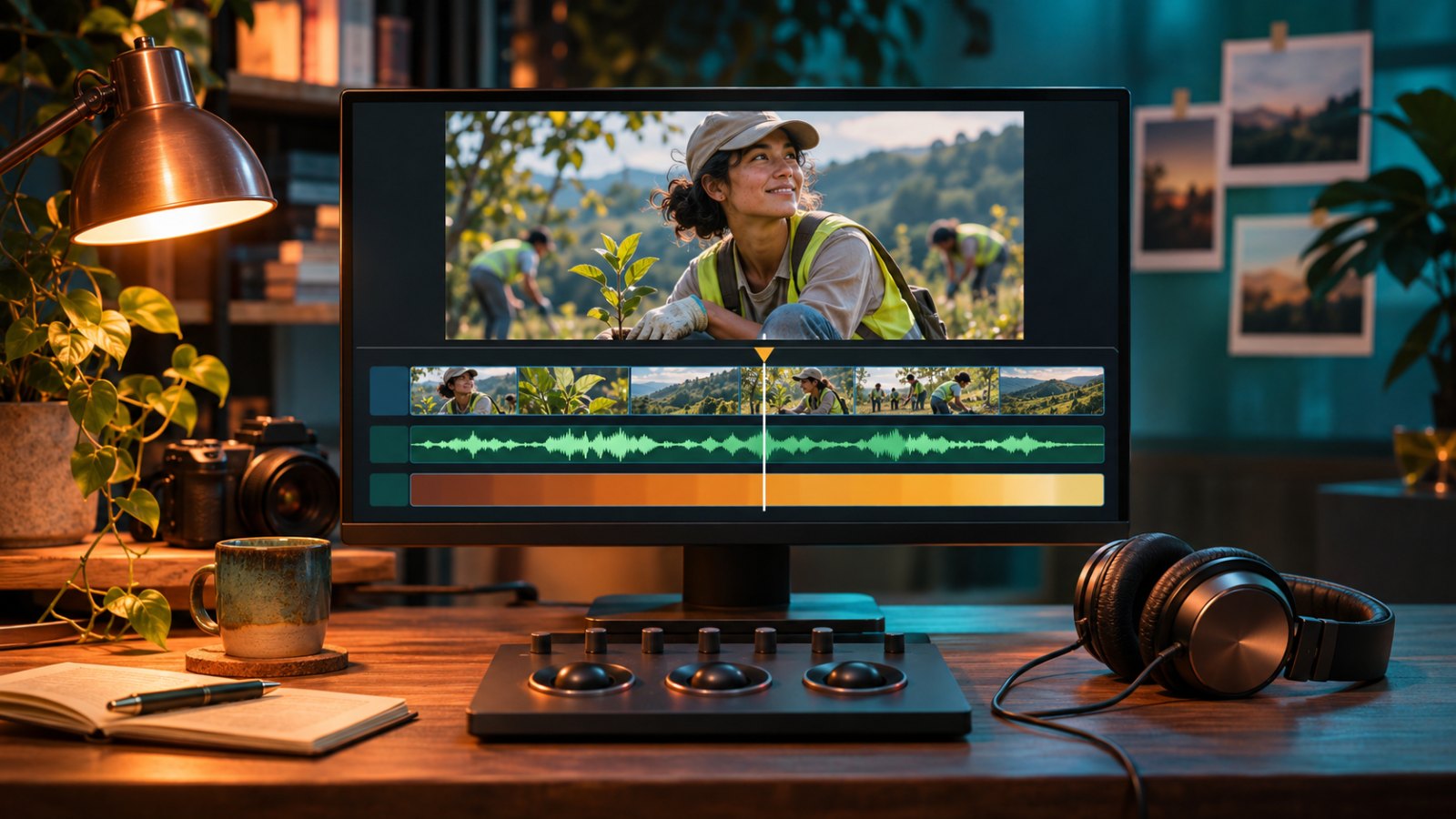
Editing is part of post-production. A role focused on editing shapes the material into a story. A broader post-production role may also handle color, sound, graphics, and final quality control. When reading a job posting, ask who changes the timeline, who checks the exports, and who signs off on delivery.
Try both kinds of work
Use the FermatMind 94-question career assessment → to explore the activities you prefer. Then try both the story edit and the delivery exercise below.
Key takeaways
- For editing, practice shot selection, pacing, and storytelling decisions. Deliver a versioned timeline.
- For finishing, practice picture, sound, captions, and export checks. Deliver a reviewed master.
- Use the same footage to make a rough cut and to deliver a finished version after picture lock. Note which work you want to keep practicing.
Short-film handoff card
Editing: story goal | reference export | timeline version | pending shots. Finishing: sound and caption versions | output specs | quality checks | sign-off owner. Confirm you are both using the same reference before work starts.
| Compare | Editing | Post-production finishing |
|---|---|---|
| Focus | Raw material and the story | Approved timing and delivery specs |
| Tasks | Select shots and refine pace | Grade color, mix sound, check captions, export |
| Deliverables | Edit project and reference export | Master file, captions, QC checklist |
| Collaborators | Director, production, visual effects | Editing, sound, color, distribution |
| Acceptance | Viewers can follow the story at the intended pace | All versions meet their agreed specs |
The editor decides when the audience learns key information
A video editor should choose footage that makes the story clear. Show the director two comparable timeline versions and explain the trade-offs in pace and timing of information.
Editorial exercise: Use approved market footage to make a 45-second piece. Viewers should learn where the event is, when it starts, and how to register. Rough cut A spends the first 12 seconds on atmosphere before revealing the date. In B, the event and its date appear within the first 7 seconds. Interview and location shots show what makes the market worth visiting, and registration information appears at the end. Ask a colleague to watch once without pausing and recall the time, place, and action. Record anything they actually miss and explain why you changed a shot or caption.
In a Southern Metropolis Daily interview, editing director Huang Shuo described how the editors of Creation of the Gods I: Kingdom of Storms organized files by scene and marked duration, version, and date. They shared change sheets with other departments when the edit changed. Helping downstream teams identify the right version is part of the handoff. For your exercise, deliver a reference export, the edit project, an asset list, temporary music and its licensing status, and any open questions. Interview with Huang Shuo · Film and video editor career profile
Related reading
Before choosing a course, check whether you get complete project files, feedback you can act on, and a final export. Evaluate career-change courses →
After picture lock, finishing teams use the same approved version
Post-production finishing checks color, sound, captions, and exports against an approved picture lock. If the timeline changes, record which items need rechecking and who signs for the revised version.
Picture lock is where the team approves the shot order and duration. In this exercise the timeline is 25 frames per second, runs for 45 seconds, and starts at 0. Calculate duration from the frame count rather than guessing from the timecode display. The target is 25 × 45 = 1,125 frames, so the last frame's zero-based index is 1,124. Replacing the interview with a shot 10 frames longer produces 1,135 frames, or 45.40 seconds. Get approval for the edit and then check downstream captions, music, graphics, and final duration again. While the revised duration is awaiting approval, the editor saves a pending version. The finishing team keeps the accepted reference and pauses work on affected sections while checking other shots and their licenses. Once the director approves the new cut, the finishing lead checks each delivery spec and sends the output to production for sign-off. If all you're changing is a caption typo and the timing stays the same, update the caption file and affected exports, then check the relevant time and aspect ratio.
The finishing log should confirm that all assets were imported, text remains visible across aspect ratios, dialogue is in sync, and the duration and export specs are correct. Before exchanging XML or AAF, test a short section in the applications on both sides and compare speed changes, transitions, and audio with the reference. Adobe's Premiere XML guide notes that some effects and audio parameters do not transfer accurately. Adobe's guide to exchanging timelines
When applying, ask who owns the final handoff
Compare video editor and post-production jobs by asking what each owns and who signs off. Use the same short film to show one storytelling revision and one finished-output check.
Mainland China's 2022 occupational classification entry for editors describes edit planning, assembling shots, and conforming and combining picture and sound for the final film. A historical vacancy on Jilin University's career platform included grading, editing, and effects under the title “video editor.” One source illustrates an occupational definition and the other shows how one employer used a title. Confirm workload, overtime, and pay with your target team and comparable vacancies. Occupational classification 2-09-03-06 · Archived Jilin University job posting
- Try editing. Deliver a rough cut and a revised cut from the same footage. Ask a colleague when they understood what the event was. Save the change, the reason for it, the before and after timestamps, and any points the director needs to decide.
- Try finishing. Export a review copy, captions, and an output log from the locked timeline. Ask a colleague to request a new interview clip or aspect ratio. Record which deliveries are invalidated, how to check them again, and who signs off on the new version.
Ask in an interview: “On the last film, who took the rough cut, who communicated changes, and who was responsible for the final delivery?” If someone covers multiple jobs, ask how the time was divided in a real day or week. Choose your first portfolio project based on the type of problem you want to keep solving.
Before delivery, ask someone to use just the handoff log to trace the master back to the approved timeline, caption version, and person who signed off. If they have a file but cannot find the matching version, fix the name and log first, then check that you exported the correct aspect ratio.
Frequently asked questions
Are editing and post-production separate jobs?
Editing is part of post-production. A posting with “post-production” in its title may cover a range of tasks or a specialty such as color, graphics, or technical delivery. Check what project files and final output the role owns.
Should a beginner learn editing or color grading first?
Use one set of approved footage to make a clear 45-second rough cut, then check picture, sound, captions, and exports. See which feedback you want to follow up and use your target vacancy to choose a new skill to practice.
Can I build a portfolio with just one editing application?
Yes. State the tools, project version, output specs, and review process. If your target role needs work across applications, document a short exchange and a revision someone else can check.
Explore further
- FermatMind 94-question career assessment. Explore which work activities you'd like to keep doing. View the career assessment →
- Courses for a career change. Check for a timeline handoff and useful feedback on actual assignments. See how to choose a course →
- Film and video editing. Review shot selection, pacing, audio sync, and handoff tasks. View the career profile →
Editorial review and methods
FermatMind Editorial reviewed occupational classifications, public vacancies, a practitioner interview, and software documentation. The edits, frame rate, and timeline changes are an editorial exercise. Use your project's confirmed asset permissions, software, and delivery specifications.

