Historical source
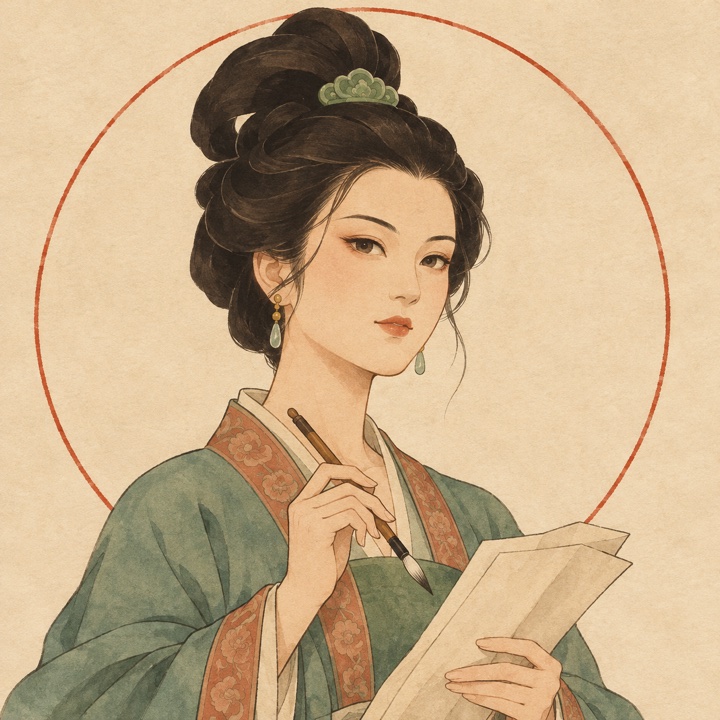
The Old Book of Tang records Shangguan Wan’er drafting imperial orders and composing verse on behalf of the emperor and empress. Old Book of Tang: Biography of Shangguan Wan’er ↗
A concrete example
When the maps disagree, you ask each guide which landmarks they recognize and put them on one map.
What this choice can bring
Putting each side's clearest point on the table can give the whole group a place to start.
The tradeoff to notice
Some differences take time. Marking what is still open lets people act on what they already agree on.
One optional small experiment
When a discussion gets stuck, write down one sentence everyone could accept and ask them to check it together.
How does it differ from the other portraits?
The figures lived at different times in the Tang and Wu Zhou eras. Their lives or work inspired six ways of making choices. The scenes are fictional and the match is for fun.
Compare the actual contribution described by each portrait below. None is superior; this is not a compatibility judgment between people.
- Wu Zetian
- A small, reversible decision lets the group make progress while there is still time to adjust.
- Di Renjie
- You can help a group separate what people have heard from what someone has actually checked.
- Du Fu
- A concrete detail about someone's day can bring a need the group overlooked into view.
- Shangguan Wan’er
- Putting each side's clearest point on the table can give the whole group a place to start.
- Xuanzang
- A firsthand look can bring back the piece of information that both reports and rumors missed.
- Li Bai
- Giving what is already on hand a new use can open up a situation after the original plan falls through.
How does this result arise?
Each answer adds one point to a portrait. The highest total wins. If totals tie, the tied portrait you picked first in the story wins.
Read a public rule example
Autumn rain has washed out a supply road, and the price of rice has jumped overnight. The letter asks what you would do first.
Bring the carriers, shops and granary together to see what each can contribute.
One letter says a well has been taken over. Another says it is closed for repairs. Both sound urgent. What do you do first?
Ask both sides to meet, compare what they know and agree on a temporary arrangement.
Questions about reading this guide
Do I need to know Tang history?
No. Each scene gives you what you need. Choose what you would do, then explore a historical source or a work on your result page.
What if another portrait also sounds like me?
Different situations can bring out different sides of you. Each play picks one figure from your six choices. Reading other guides does not change the result.
Does this identify my MBTI type or a suitable career?
No. This is original entertainment content, not a conversion into a personality type, ability, diagnosis or career fit. If you want another framework, explore each assessment’s purpose and versions from All Tests; accepting this portrait is not a prerequisite.

