Content category
Personality Psychology
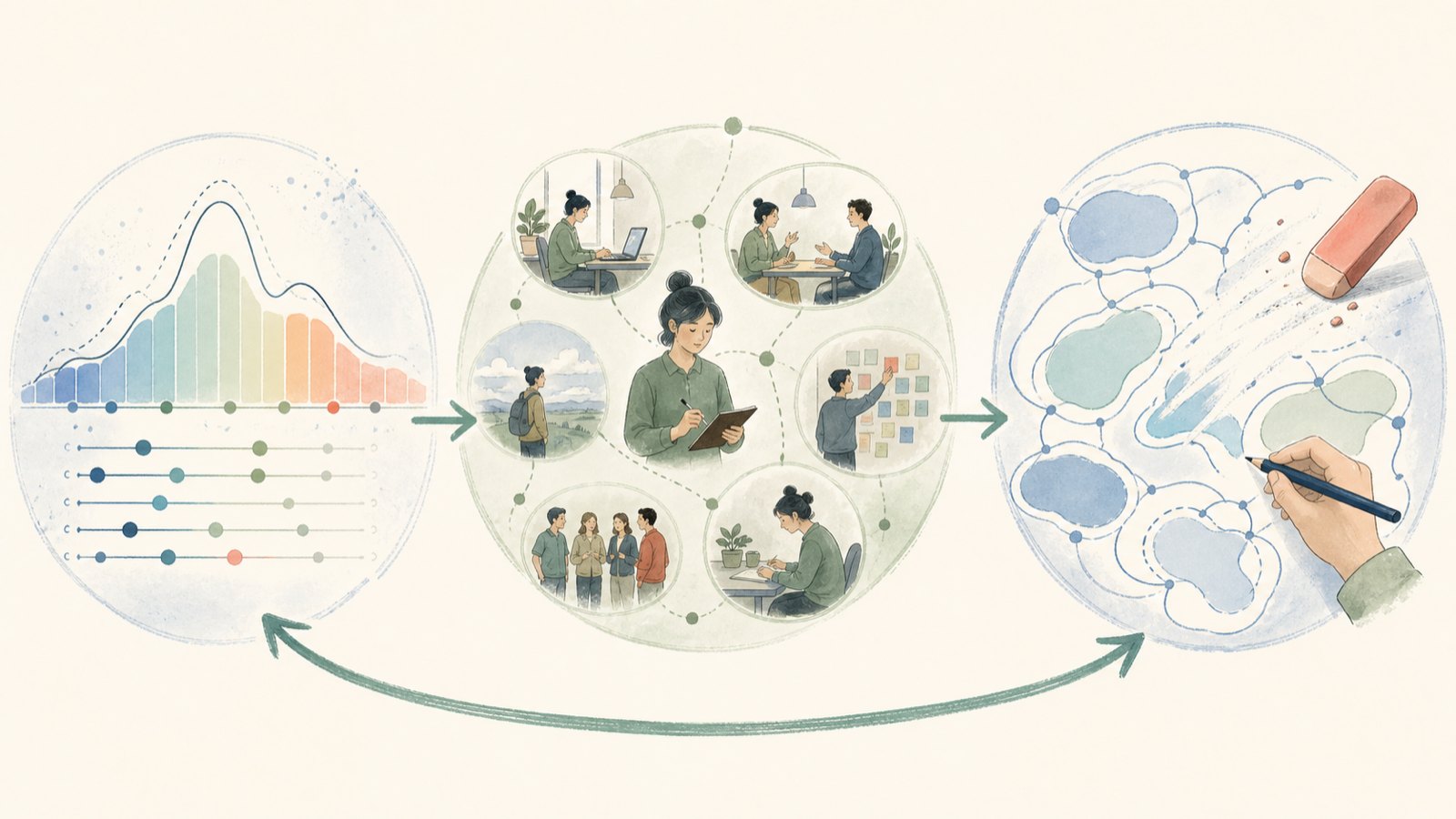
Big Five feedback can offer tentative behavioral clues, not a diagnosis. Distinguish raw scores, standard scores, and percentiles, and examine descriptions against specific everyday records; personal observation is not scale or product validation.
By: Fermat Institute
Published: Oct 3, 2026
Updated: Oct 3, 2026
11 min read
Human review completed · Oct 2, 2026When should I use this article?
Use this article when you want to connect public content with tests, personality profiles, or career guidance from a single starting point.
Does this replace formal judgment?
No. It offers public explanation and action cues, but does not replace medical, legal, or professional judgment.
Content category
Personality Psychology
Related tags
Big Five, Personality Test
Return to the article hub to keep expanding the public reading chain.
Continue from the article into a more structured topic entry surface.
If you want to turn reading into self-measurement, continue into an assessment.
Big Five personality feedback is not a diagnosis. It can provide tentative clues about behavioral tendencies to examine. Interpreting a position within a population requires a specified comparison sample and conversion rules. Raw scores can also be understood using an instrument’s documented scoring and interpretation rules; a number alone does not establish a percentile or normative high/low level. The observation steps here are editorial suggestions, not a validated intervention or individual diagnosis. Score and norm terminology
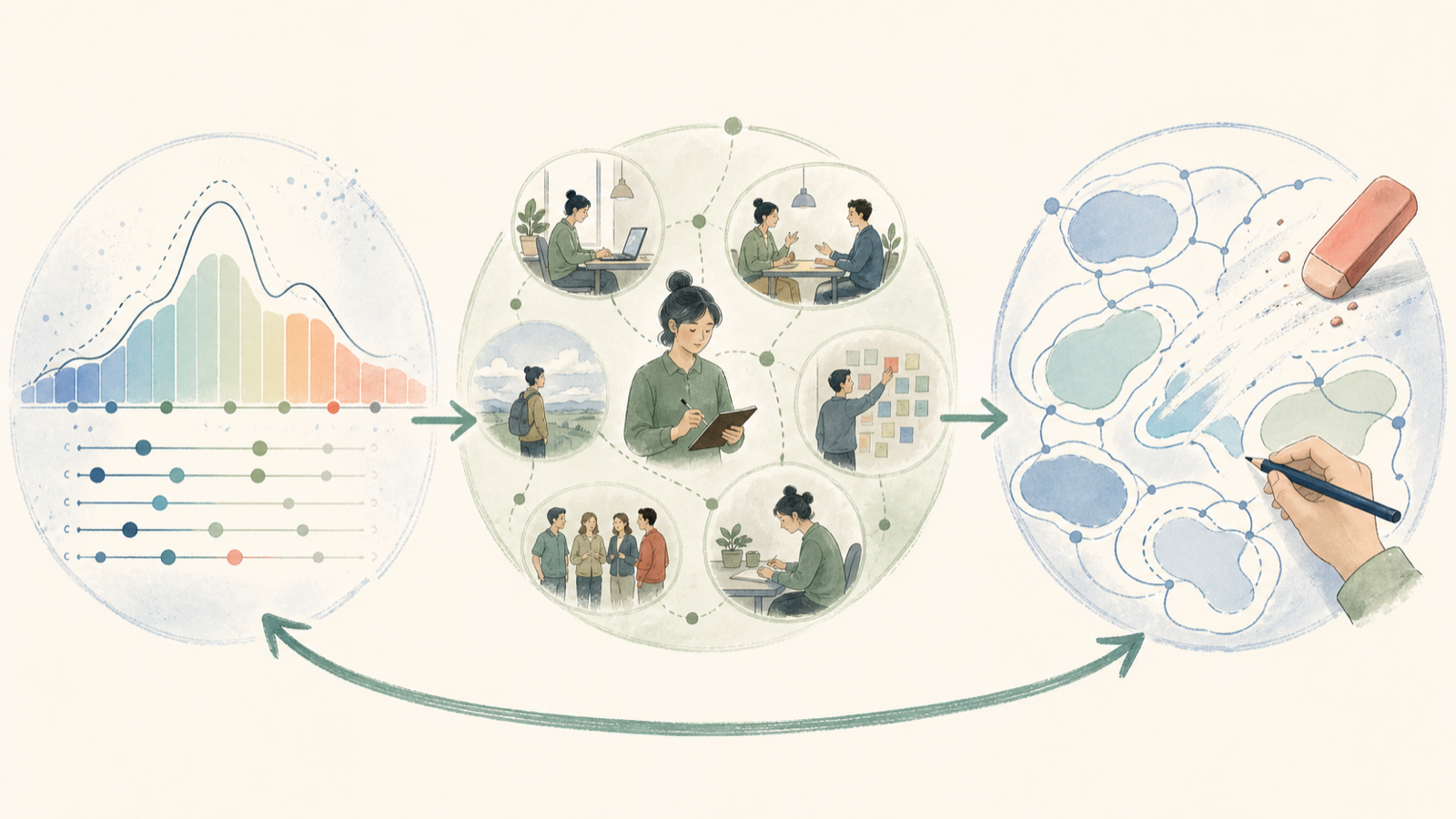
Big Five test scores describe your self-reported tendencies across five dimensions, rather than a fixed “personality type.” There are several key reasons:
Scores describe continuous tendencies, not type labels. The Big Five model treats personality as continuous dimensions rather than discrete categories. Whatever score you receive on a dimension, it describes your approximate position along that continuum, rather than classifying you as “an X-type person.” This is quite different from classifications based on zodiac signs or blood types.
Responses have contextual limits. A self-report questionnaire aggregates descriptions under its instructions; one score is not a direct record of behavior in every situation. Behavior at work and at home can differ. Whether a score represents an average, and how it is aggregated, depends on the instrument’s items, scoring, and interpretation rules.
The test measures self-reports, not direct observations of all behavior. Studies of specified questionnaires address social-desirability-related factors (Bäckström et al., 2009) and induced emotions affecting self-ratings (Querengässer & Schindler, 2014). Findings concern their particular instruments, samples, and conditions. They do not guarantee a score change for a person in a particular mood or establish its magnitude in a FermatMind product.
Scores are not fixed points. Anusic and Schimmack (2016) used the meta-analytic stability and change model (MASC) to divide reliable variance in personality traits into approximately 83% attributable to stable influences and approximately 17% attributable to change influences. This tells us that personality has both stability and plasticity. It does not tell us the “normal fluctuation range” for an individual test or directly establish a specific retest interval.
Before interpreting Big Five scores, distinguish three different kinds of scores. They are often confused, but their meanings differ substantially:
A raw score directly aggregates responses under an instrument’s rules, such as an average or total. Its documented scale and interpretation rules can describe those responses. Without a specified reference sample and conversion rule, it does not establish a population percentile.
A standard score, such as a T-score or z-score, results from statistically transforming a raw score. T-scores, for example, usually have a mean of 50 and a standard deviation of 10. A T-score of 60 means your score on that dimension is 1 standard deviation above the normative mean. This does not mean “you are at the 60th percentile.” A T-score of 60 corresponds approximately to the 84th percentile, assuming a normal distribution.
A percentile tells you what percentage of people in the normative population score below you. A percentile of 60 means you score higher on that dimension than approximately 60% of the normative population. Mapping standard scores to percentiles requires a specified reference distribution, conversion method, and treatment of tied scores. There is no universal conversion without those conditions.
A common mistake is seeing “a score of 60” and assuming it means “higher than 60% of people.” If it is a T-score with mean 50 and standard deviation 10, and the reference distribution is normal, it corresponds approximately to the 84th percentile. Only if 60 is itself a percentile does it mean higher than 60% of people. First confirm what kind of score your report presents; do not infer it yourself.
We rarely approach personality test feedback with complete neutrality. The following research offers clues about accepting feedback, without explaining every person’s response:
The Barnum/Forer effect. Dickson and Kelly’s (1985) review abstract discusses acceptance of vague, general personality descriptions and the roles of apparent relevance and favorability. Furnham and Schofield (1987) also review feedback acceptance. When feedback feels accurate, check whether it provides observable, falsifiable information. That check does not itself validate a product.
Self-verification motives. Swann and colleagues (1992) examine choices of evaluators in specified samples with different self-views, including negative ones. These findings cannot establish every reader’s first response to every report. Treat whether feedback fits your existing narrative as an observation question, not a psychological verdict already made for you.
A bias toward positive feedback. Barnum-effect reviews discuss favorability and feedback acceptance. This cannot establish how a particular reader accepts a particular dimension’s result. These group studies cannot determine your individual response in advance.
A mismatch between a report and your sense of yourself does not necessarily mean the report is wrong, or that your self-view is wrong. Possible reasons include:
Your state while answering. Querengässer and Schindler (2014) compared self-ratings before and after induced emotions in 98 German participants. The abstract reports increased neuroticism and decreased extraversion in the sadness condition, and a trend toward higher extraversion in the happiness condition. This does not establish effects for an individual reader, another instrument, or real-life stress. Record the response context without automatically treating it as the cause of a difference.
Blind spots in self-knowledge. Bollich and colleagues’ (2011) Hypothesis & Theory article reviews empirical work on self- and other-knowledge while proposing paths through which feedback might improve self-knowledge. The effectiveness of a particular feedback intervention still needs evidence. A friend’s observation offers another perspective, not an automatically more accurate verdict.
The normative reference group. A percentile depends on its comparison group and conversion rules. A hypothetical score with different relative positions in two groups illustrates this principle; it is not an observed comparison of university students and sales professionals.
Social desirability. Bäckström and colleagues (2009) study a general factor related to social desirability and neutral item wording in specified five-factor questionnaires. This does not establish that honest responses necessarily improve an individual product score’s accuracy. Answering from actual experience is response advice; accuracy still requires validation for the instrument and use.
Specific report descriptions can become observation questions to examine. The three steps below organize everyday records; they are not statistical hypothesis tests and cannot validate a scale’s validity, norms, or individual predictive accuracy:
Step 1: Turn the score into a specific, testable statement. When you see “Agreeableness: relatively low,” do not simply accept the label. You might ask a contextual observation question: “During disagreements, do I tend to maintain my position rather than seek consensus? Which situations have relevant records or counterexamples? This is an example question constructed while reading; a low score alone does not mean the report has validated that behavior.”
Step 2: Actively gather real-life evidence. Observe your actual behavior in relevant situations over the next two to three weeks and keep simple notes. Record both supporting and contrary observations. Invite trusted friends to describe specific situations: self-reports and reports by others capture different aspects of information. Agreement and disagreement in specific situations can guide further exploration. Friends and self-reports may share biases; agreement alone does not establish that a conclusion is correct.
Step 3: Revise your understanding and iterate. If everyday observations broadly support the hypothesis, it can become part of your self-understanding. If you find many counterexamples—for example, in a fictional case, a report describes low conscientiousness but you have completed important projects on time for several months—adjust your interpretation. Observe relevant behavior again in similar situations later; you need not retest immediately.
When scores strongly disagree with your actual behavior across several important areas of life. If records at work, at home, and socially conflict with a report, examine the scope of its description, response conditions, memory biases, and specific examples. Everyday observations and tests both have limitations; neither can be presumed more accurate in advance.
When you took the test under high pressure or while feeling low. Record that context. Specified emotion-induction research cannot show that every stressful occasion changes self-ratings in the same way, or how much your score reflects a state versus a trait.
When evidence for the instrument and use is unclear. Check the version, scoring method, and reliability and validity evidence for the language, sample, and intended use. Claims about population percentiles or normative high/low levels also require a comparison sample and conversion rules. The absence of published norms alone does not establish poor quality: the BFI-2 authors’ website states that no official manual with published norms exists. This does not validate a product’s own percentiles.
When score presentation is opaque. Establish whether the score is raw, standardized, or a percentile, and check its interpretation rules. Describing a raw score does not necessarily require norms; claims about relative population position require a reference basis. If information is missing, leave the ranking uncertain rather than supplying one yourself.
Boundaries: This article is for education and limited self-observation, not a substitute for professional assessment or a sole basis for personnel decisions. It provides no evidence sufficient to verify reliability, validity, norms, individual prediction, or feedback-intervention effects for a specific FermatMind version. This product evidence requires separate verification. Consult the authoritative documentation for the specific instrument, version, and scoring rules separately.
Q1: Can Big Five scores change?
They can change. Roberts and colleagues’ (2006) meta-analysis of 92 samples reported age-related changes in group mean traits, including increases in conscientiousness and emotional stability during adulthood. This does not guarantee change for a particular person or predict its direction, magnitude, or a difference on one product retest.
Q2: Do high and low scores mean good and bad?
No. Big Five dimensions have no absolute “good” or “bad” standard. A score’s meaning depends on context: the same trait may have different adaptive outcomes in different environments. A dimension’s high or low score alone cannot establish personal worth, adaptation, or future outcomes.
Q3: Why did I get different results on two tests?
The difference alone does not establish which result is more real. Anusic and Schimmack (2016) used MASC to divide reliable personality trait variance into approximately 83% stable influences and 17% change influences. This illustrates both stability and plasticity, but does not directly give a fluctuation amount for a specified test interval. If the difference is large, check whether test conditions were consistent: emotional state, response environment, and scale version.
Q4: Should I trust a friend or a report when they disagree?
Both can offer observation clues and both have limits. Bollich and colleagues (2011) review empirical research on self- and other-knowledge as well as proposing feedback paths. These studies do not validate this article’s feedback steps. Compare specific situations; agreement or disagreement can suggest further observations without deciding automatically which account is correct.
Q5: Does high neuroticism mean something is wrong with me?
A personality dimension score is not a mental-health diagnosis and cannot determine whether you need a particular service. This article does not assess health using a score, threshold, or duration. If you have concerns about health or safety, seek appropriate professional support without waiting for a personality result to make that judgment.
Q6: How can I judge whether a test is reliable?
Identify the instrument, version, item source, scoring rules, and score type, then examine reliability and validity research for the language, sample, and intended use. A paper or a “Big Five” label does not automatically validate a particular product. If percentiles are supplied, check their comparison group and conversion method. Missing published norms alone does not establish poor quality for a raw-score instrument.
Q7: Can this article be used for diagnosis or recruitment?
No. It is for education only, helping readers understand the nature and limitations of personality test feedback. It cannot replace professional psychological assessment or clinical diagnosis, and should not be used for personnel selection or any high-stakes decision. If you are concerned about your mental health, consult a licensed mental health professional.
Want to explore Big Five scores and the boundaries of reflection?
Try the Big Five personality test →
The three observation steps and two-to-three-week journaling window are adjustable editorial suggestions, not a treatment schedule, retest interval, or product-validation finding established by these studies.